
Stomach Paralysis and Ozempic: What You Need to Know

Written by Terry Turner
Ozempic and other GLP-1 drugs may cause slow digestion and, in some cases, serious stomach problems like stomach paralysis (gastroparesis). Common warning signs include nausea, vomiting and bloating. Recovery time after stopping Ozempic varies, but most people gradually improve as the drug leaves their system.
What Is Stomach Paralysis?
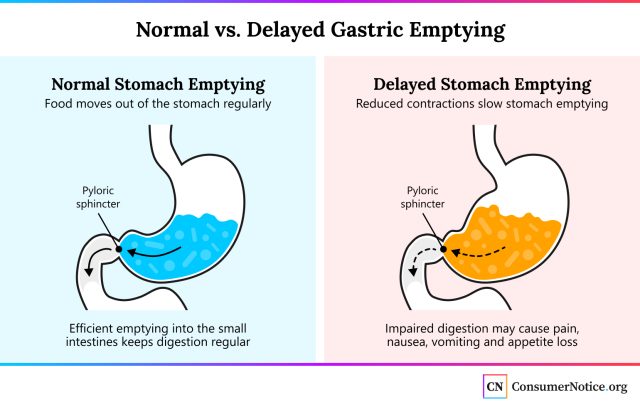
Stomach paralysis, also called gastroparesis, happens when the stomach muscles do not move food as they should. Normally, the stomach breaks down food and moves it into the small intestine for digestion. With stomach paralysis, this process slows or stops.
When food stays in the stomach too long, it can cause pain, nausea, vomiting and bloating. It can also be a challenge to eat normally. Some people feel full after only a few bites, vomit up undigested food or lose weight because they can’t eat enough.
Signs Your Stomach May Be Paralyzed
Gastroparesis symptoms can be frustrating because they often start slowly and might be mistaken for a simple stomach bug or indigestion.
- Bloating and stomach pain.
- Feeling full after only a few bites.
- Nausea and vomiting, especially after eating.
- Undigested food comes back up hours later.
- Unexpected weight loss or trouble eating normally.
Get medical help immediately if you have severe or ongoing stomach pain, vomiting that lasts more than an hour, trouble breathing, fainting, fever, blood in your vomit or dangerously high or low blood sugar levels.
You call your doctor if you notice signs of dehydration, such as extreme thirst, dark urine, dizziness or fainting. You should also seek guidance from a provider if you have signs of malnutrition, like unexplained weight loss, constant fatigue, loss of appetite or pale skin.
Can Ozempic Cause Stomach Paralysis?
Ozempic may be linked to stomach paralysis because it slows digestion. Other weight-loss and diabetes injections, such as Wegovy and Mounjaro, can have a similar effect. In some people, these medications slow the stomach too much, which can cause food to stay in the stomach longer and lead to nausea, vomiting, bloating and pain.
A 2023 study in JAMA found that people using GLP-1 drugs like Ozempic were much more likely to develop gastroparesis than those not taking these medications. In 2023, the FDA added a warning about ileus — blockage of the intestines — showing that these side effects are a serious concern.
Some lawsuits claim that Ozempic and other GLP-1 medications have caused stomach paralysis and other digestive problems. If you notice symptoms after starting treatment, talk to your doctor to see if your medication could be the cause.
Stomach Paralysis Symptoms to Watch For
You may think these symptoms are just normal stomach issues, but if you take Ozempic or a similar medication, they could be more serious. Gastroparesis can change digestion in ways that are easy to miss at first.
Early signs can include nausea, bloating, stomach pain, feeling full quickly and vomiting after meals. Some people also notice burping, reflux, constipation or food coming back up hours later. These symptoms might seem like regular indigestion at first, but they can last longer if your stomach is not emptying as it should.
More serious symptoms include vomiting often, not being able to keep food or water down, and losing weight without trying. If these problems started or got worse after you began taking a GLP-1 drug, pay attention to the timing and let your doctor know.
When Symptoms May Be Serious
Get medical help right away if you have nonstop vomiting, cannot keep food or water down, or are losing weight for no clear reason. Contact your doctor as soon as you can if you notice these symptoms while taking Ozempic for weight loss or diabetes treatment, or while taking Wegovy or another weight-loss medication.
If you notice these symptoms after starting a GLP-1 medication, it could mean the drug is affecting how your stomach empties. Seeing a doctor early can help prevent dehydration, stomach problems and other issues.
Bowel Obstruction and Other GLP-1 GI Risks
The FDA had received more than 1,200 reports of ileus and bowel obstructions from people taking Ozempic as of June 2026. Reports to the FDA do not prove every case was caused by the drug, but they do show why these symptoms should be taken seriously.
| CONDITION | NUMBER OF CASES |
|---|---|
| Intestinal Obstruction | 1,011 |
| Ileus | 554 |
| Ileus paralytic | 31 |
| Small intestinal obstruction | 130 |
| Large intestinal obstruction | 23 |
| TOTAL REPORTS | 1,749 |
These problems are usually more severe and last longer than regular nausea or constipation. People might have worse abdominal pain, swelling, ongoing vomiting or trouble passing stool or gas. These can be signs that the digestive system is not working properly.
These injuries have also become part of active Ozempic lawsuits involving GLP-1 medications.
Is Ozempic Stomach Paralysis Permanent?
Ozempic-related stomach paralysis is not permanent for many people, and symptoms may improve after stopping the medication.
Gastroparesis symptoms often begin to improve within four to five weeks, which is about how long it takes for Ozempic to mostly leave the body. Still, recovery time is different for everyone. Some people may have symptoms for a longer period, depending on how their stomach works and how severe their symptoms are.
- Dose: Higher doses of Ozempic may cause more pronounced and persistent effects.
- Duration of treatment: Longer exposure to semaglutide may cause prolonged symptom resolution.
- Symptom severity: More severe gastroparesis typically requires longer recovery periods.
- Underlying conditions: Diabetic neuropathy or gastric motility disorders may delay or limit recovery.
In some cases, lingering symptoms may also raise legal questions about whether the drug caused a lasting injury. If that sounds familiar, it may be worth reviewing your symptoms and their long-term impact with a lawyer.
What to Do if You Have These Symptoms
If you have nausea, vomiting, bloating or other stomach problems while taking Ozempic or another GLP-1 drug, take these symptoms seriously. They could be more than just routine side effects, especially if they began after you started the medication.
Step 1 — Tell Your Doctor
Do not assume these are normal side effects. Let your doctor know you are taking Ozempic, Wegovy or Mounjaro and describe your symptoms, when they started and if they are getting worse. Your doctor can help decide if you need to stop the medication.
Step 2 — Document Your Experience
Write down when your symptoms started, how bad they have been and how they have affected your daily life. You can also track your meals, vomiting episodes, missed work, urgent care visits and any test results. This information is important if you decide to look into legal options later.
Step 3 — Learn About Your Legal Options
Some people who developed serious stomach problems while taking Ozempic or similar GLP-1 drugs have filed lawsuits. A free case review can help you determine whether your situation qualifies. After completing a form with Consumer Notice, an attorney will review your case. There is no cost or obligation to pursue an Ozempic lawsuit, and if you choose to move forward, you pay nothing unless your lawyer wins your case.
Frequently Asked Questions
Please seek the advice of a qualified professional before making decisions about your health or finances.

Terry Turner has been writing articles and producing news broadcasts for more than 30 years. An Emmy-winning journalist, he has reported on consumer policy issues before Congress, the Consumer Product Safety Commission, the Food and Drug Administration and other federal agencies.

Consumernotice.org adheres to the highest ethical standards for content production and references only credible sources of information, including government reports, interviews with experts, highly regarded nonprofit organizations, peer-reviewed journals, court records and academic organizations. You can learn more about our dedication to relevance, accuracy and transparency by reading our editorial policy.
- Sodhi, M., et al. (2023, October 5). Risk of Gastrointestinal Adverse Events Associated With Glucagon-Like Peptide-1 Receptor Agonists for Weight Loss. Retrieved from https://jamanetwork.com/journals/jama/fullarticle/2810542
- U.S. Food and Drug Administration. (2023, September 22). Drug Safety-Related Labeling Changes (SrLC). Retrieved from https://www.accessdata.fda.gov/scripts/cder/safetylabelingchanges/index.cfm?event=searchdetail.page&DrugNameID=2183
Editors carefully fact-check all Consumer Notice, LLC content for accuracy and quality.
Consumer Notice, LLC has a stringent fact-checking process. It starts with our strict sourcing guidelines.
We only gather information from credible sources. This includes peer-reviewed medical journals, reputable media outlets, government reports, court records and interviews with qualified experts.
Calling this number connects you with a Consumer Notice, LLC representative. We will direct you to one of our trusted legal partners for a free case review.
Consumer Notice, LLC's trusted legal partners support the organization's mission to keep people safe from dangerous drugs and medical devices.
844-420-1914