Is Roundup Safe?
Is Roundup safe? The EPA and WHO disagree. The weed killer contains glyphosate and research has shown potential associations between high levels of glyphosate exposure and non-Hodgkin lymphoma. Evidence also shows that exposure to large amounts of Roundup may be harmful to pets.
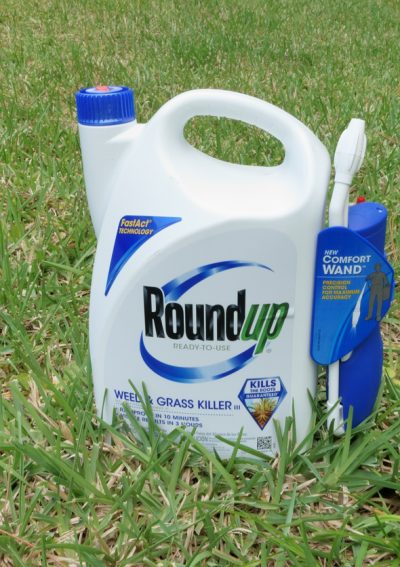
Roundup Safety
Risks associated with Roundup use are tied to its active ingredient, glyphosate. The EPA classifies Roundup as “safe for use,” but the International Agency for Cancer Research, an arm of the World Health Organization, classifies glyphosate as a “probable human carcinogen.”
Some studies indicate glyphosate increases the risk of developing non-Hodgkin lymphoma among people with long-term exposure. Research also shows that long-term, high-level glyphosate exposure may impact developing fetuses in pregnant women and may be damaging to a healthy gut microbiome. These healthy bacteria in our intestines play a key role in regulating body-wide health.
Severity of short-term effects depends on the amount and route of exposure.
- Skin contact:
- The chemical can irritate the skin it comes into contact with.
- Breathing:
- Brief periods of inhaling glyphosate may cause nasal and throat irritation and asthma symptoms.
- Ingestion:
- Ingesting glyphosate can burn the mouth and throat, and cause nausea, vomiting and diarrhea. Consuming large amounts of glyphosate can be fatal.
Why Do Experts “Disagree”? Hazard vs. Risk Explained
Some experts disagree about the link between Roundup and cancer because “hazard” and “risk” describe two different kinds of scientific evaluation.
A hazard refers to a substance’s inherent potential to cause harm — for example, whether glyphosate can cause cancer under any condition. A risk assessment assesses the likelihood of harm under real-world conditions, taking into account how much and how often people are exposed to the hazard.
That difference explains why the IARC (which identifies hazards) declared glyphosate a “probable human carcinogen,” while U.S. and EU regulators (who assess risk at normal exposure levels) concluded that glyphosate is unlikely to cause cancer when used as directed.
| Hazard (IARC Approach) | Risk (Regulatory Approach) |
|---|---|
| Asks: “Can this substance cause harm?” | Asks: “Is harm likely at real-world exposure levels?” |
| Based on laboratory and mechanistic data | Based on exposure, dose and population data |
| Identifies potential dangers | Evaluates the actual likelihood of harm |
EPA Decision on Roundup
The EPA reviewed glyphosate data concerning human health and ecological risks in 2009 and 2015 and published its findings in 2017. After reviewing public comments on the findings, the EPA published a temporary interim registration review decision in 2020.
The EPA then withdrew the 2020 interim decision and now plans to issue a new, complete final registration review decision in 2026.
Once the EPA issues its decision, products containing glyphosate will need to carry a new safety label. In the U.S., glyphosate has been a registered herbicide since 1974, and the EPA has periodically reevaluated safety data on the chemical since then.
The EPA has historically determined that the glyphosate-containing herbicide Roundup is safe to use when following the label directions and that glyphosate is unlikely to be a human carcinogen. Despite increasing public concern over glyphosate safety and ongoing reevaluation of glyphosate research, the EPA has maintained that glyphosate is safe when users follow the label directions.
When EPA and manufacturers say glyphosate products are safe when “used as directed,” they are referring to use that follows the product’s EPA‑approved label in detail. This typically includes following the application instructions and wearing the suggested protective clothing. These instructions are based on how people might use glyphosate.
In real‑world settings, use can differ from these assumptions when people over-apply the product, mix it more concentrated than directed, spray in windy conditions that increase drift, fail to wear recommended protection or use glyphosate in unapproved situations. This may increase actual glyphosate exposure above what the EPA modeled.
Glyphosate Regulations
The U.S. Food and Drug Administration ensures herbicide residue on food crops doesn’t exceed the EPA’s safety limits. The EPA evaluates a herbicide to ensure it’s safe for human health when used according to label directions and sets a tolerance level based on that evaluation.
The EPA sets a tolerance level for any herbicide that growers use on food crops consumed in the U.S., including corn, soy and grains. The FDA then tests crops to ensure they don’t contain herbicide residue levels greater than set tolerance levels.
While the U.S. has no national glyphosate ban, some states and municipalities restrict its use. Globally, countries prohibiting glyphosate-based products include Germany and Saudi Arabia.
What Are Glyphosate Residue Limits (MRLs)?
Regulators set “tolerances” or maximum residue limits (MRLs), the highest amount of glyphosate legally allowed to remain on a food when the herbicide has been used according to its label. These limits are based on toxicology studies and field trials, in which crops are treated at or above typical use rates and then tested to see how much residue is left at harvest.
When governments set a glyphosate tolerance for a crop, they also check that typical diets would keep people’s intake below health‑based benchmarks such as acceptable daily intakes over a lifetime. Different countries can set different glyphosate MRLs for the same food because they may consider different safety factors, dietary assumptions or policy choices.
Roundup Lawsuits
Bayer has faced Roundup lawsuits claiming glyphosate exposure caused their diagnoses of non-Hodgkin lymphoma. Bayer has agreed to pay billions of dollars to plaintiffs, and courts have combined thousands of cases into multidistrict litigation.
It’s important to note that courtroom outcomes follow legal standards of proof and procedural rules, which differ from how scientists and regulators evaluate evidence. Jury verdicts and settlements often reflect individual facts, internal company documents and witness credibility, rather than a formal consensus on causation or overall population risk.
Scientific and regulatory bodies review studies, weight‑of‑evidence methods and predefined risk thresholds. Because these systems answer different questions — legal responsibility for specific plaintiffs versus broad safety standards for the public — they can reasonably arrive at different conclusions, even when they use data from some of the same studies.

Is Roundup Safe For Pets?
Dogs spend time outdoors in close contact with grass and plants and may be at risk of exposure to recently applied Roundup. Cats that go outdoors can have similar high exposure levels. When pets lick their fur, they can ingest glyphosate.
- Keep pets off sprayed lawns for 48 hours after application. Wait until sprays are completely dry, as weed killer residue can linger. Always follow the specific waiting time and re‑entry instructions on the product label.
- Rinse your pets’ paws and fur if you suspect they walked through a recently treated area, and prevent them from licking contaminated fur or grass.
- Avoid regularly walking dogs on uniformly green, weed‑free lawns or near freshly treated rights‑of‑way, golf courses or sports fields. These may have higher herbicide and pesticide use.
- Talk with your veterinarian about safer lawn‑care options if you are concerned about your pets.
Dr. Lauren Trepanier of the University of Wisconsin-Madison School of Veterinary Medicine found that weed killer chemicals were present in most of the dogs she tested for pesticide and herbicide exposure, and many had very high levels. Pets are smaller than humans, meaning they’re more vulnerable to “ground-level toxins,” said U.S. Humane Society veterinarian Dr. Barbara Hodges.
- Mild symptoms:
- Ingesting a small amount of glyphosate may lead to nausea, hypersalivation, vomiting or diarrhea.
- Emergency signs (when to call a vet):
- Vomiting that doesn’t stop, severe diarrhea, trouble breathing, collapse, fast heart rate, seizures or any loss of control of body movement, and a serious change in behavior after possible exposure.
In some cases, repeated exposure to glyphosate has been linked to long-term kidney or liver effects in dogs.
Is Roundup Safe For Lawns?
Roundup’s main ingredient is a nonselective herbicide that damages or kills any plant it touches, including ornamental species. Effective at killing weeds, glyphosate can also kill the grass around weeds and may damage lawns. When sprayed, it can also drift to other areas, damaging plants or grass.
Bayer no longer manufactures or sells any Roundup formulations with glyphosate for residential use in the U.S., but old products containing glyphosate may still be available in stores. The company started introducing new lines of lawn and garden products made without glyphosate in late 2022. Make sure to check the ingredient label of any Roundup products for glyphosate.
Safer alternatives to Roundup include iron- and vinegar-based herbicide sprays, soap salts, manual mulching and integrated weed management techniques. Roundup alternatives work best in combination because different methods affect various growing stages of weeds. Integrated weed management techniques combine different methods and are most effective over multiple years and growing cycles.


11 Cited Research Articles
Consumernotice.org adheres to the highest ethical standards for content production and references only credible sources of information, including government reports, interviews with experts, highly regarded nonprofit organizations, peer-reviewed journals, court records and academic organizations. You can learn more about our dedication to relevance, accuracy and transparency by reading our editorial policy.
- Adams, B.W. (2023, March 31). Dogs, lawn care and cancer. Retrieved from https://www.humanesociety.org/news/dogs-lawn-care-and-cancer
- Wallace, J. & Lingenfelter, D. (2023, January 5). Glyphosate (Roundup): Understanding Risks to Human Health. Retrieved from https://extension.psu.edu/glyphosate-roundup-understanding-risks-to-human-health
- U.S. Food & Drug Administration. (2022, February 28). Questions and Answers on Glyphosate. Retrieved from https://www.fda.gov/food/pesticides/questions-and-answers-glyphosate
- Weisenburger, D.D. (2021, September 21). A Review and Update with Perspective of Evidence that the Herbicide Glyphosate (Roundup) is a Cause of Non-Hodgkin Lymphoma. Retrieved from https://pubmed.ncbi.nlm.nih.gov/34052177/
- Bayer. (2021, July 29). Bayer Provides Update on Path to Closure of Roundup Litigation. Retrieved from https://www.bayer.com/media/en-us/bayer-provides-update-on-path-to-closure-of-rounduptm-litigation/
- Pu, Y. et al. (2020, March 30). Maternal glyphosate exposure causes autism-like behaviors in offspring through increased expression of soluble epoxide hydrolase. Retrieved from https://www.pnas.org/doi/full/10.1073/pnas.1922287117
- Charles, D. (2019, May 30). Safe Or Scary? The Shifting Reputation Of Glyphosate, AKA Roundup. Retrieved from https://www.npr.org/sections/thesalt/2019/05/30/727914874/safe-or-scary-the-shifting-reputation-of-glyphosate-aka-roundup
- Henderson, A.M. et al. (2019, March). Glyphosate General Fact Sheet. Retrieved from http://npic.orst.edu/factsheets/glyphogen.html
- Mao, Q. et al. (2018, May 29). The Ramazzini Institute 13-week pilot study on glyphosate and Roundup administered at human-equivalent dose to Sprague Dawley rats: effects on the microbiome. Retrieved from https://pubmed.ncbi.nlm.nih.gov/29843725/
- Frank, K. & Hathaway, A. (2017, March 31). What’s the difference between Roundup and Roundup for Lawns? Retrieved from https://www.canr.msu.edu/news/difference_between_roundup_and_roundup_for_lawns
- Hommerding, H. (n.d.). The Grass Is Always Greener: Common Fertilizer and Herbicide Exposure in Pets. Retrieved from https://www.petpoisonhelpline.com/blog/grass-always-greener-common-fertilizer-herbicide-exposures-pets/
Calling this number connects you with a Consumer Notice, LLC representative. We will direct you to one of our trusted legal partners for a free case review.
Consumer Notice, LLC's trusted legal partners support the organization's mission to keep people safe from dangerous drugs and medical devices. For more information, visit our partners page.
855-605-1792