1,4-Dioxane Water Contamination Lawsuits
1,4-Dioxane is a chemical sometimes found in drinking water and some common products. Regulators consider it a likely cause of cancer in humans. There have already been lawsuits against manufacturers, with public agencies claiming the companies knew about the contamination but didn’t do enough to fix it or inform the public.
If you have been exposed to 1,4-dioxane through water or products, these lawsuits suggest that you might have legal options, depending on your situation.
What Is the 1,4-Dioxane Lawsuit About?
1,4-Dioxane lawsuits claim that companies manufactured, advertised or sold products containing the chemical, even though they knew it was dangerous. The lawsuits say these actions allowed the chemical to enter rivers and groundwater, making drinking water unsafe and harming people and the environment. 1,4-Dioxane is frequently used as a solvent or stabilizer and is often a by-product of detergent, shampoo, and cosmetics manufacturing.
These lawsuits may list chemical makers, consumer product companies, and water utility agencies as defendants. Who gets named depends on where the 1,4-dioxane water contamination started and who was supposed to prevent or report it.
How People Were Exposed
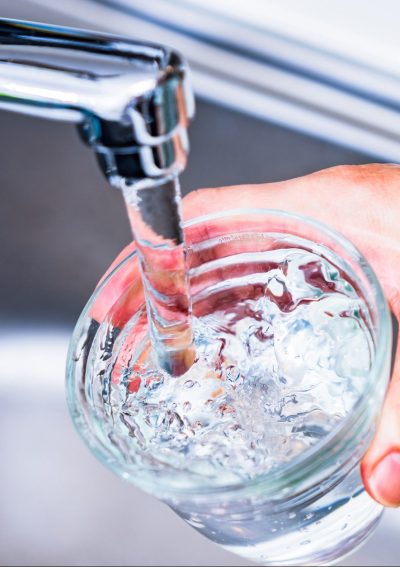
People may be exposed through contaminated drinking water, either from city systems or private wells, and through household products that contain 1,4-dioxane, like shampoos, detergents and shower gels.
Some locations have experienced more severe contamination, especially places with long-term industrial waste or polluted groundwater. For instance, Michigan’s Gelman Sciences site in Ann Arbor is a former manufacturing plant where 1,4-dioxane was discovered in 1984. A 2022 study found that contamination has continued to spread to more than 124 private wells despite cleanup efforts.
Who May Qualify for a 1,4-Dioxane Lawsuit?
You might qualify for a 1,4-dioxane lawsuit if you drank water or used products that had the chemical in them and then got a serious illness linked to it. The U.S. Environmental Protection Agency says 1,4-dioxane can cause cancer and damage the liver and nose.
The Centers for Disease Control and Prevention says drinking water containing 1,4-dioxane or long-term exposure to 1,4-dioxane can harm your liver and kidneys, or possibly cause death.
1,4-Dioxane personal injury lawsuits are in the early stages. They’ll likely focus on serious injuries identified in medical or scientific studies. These may include cancer or organ damage that happens after being around 1,4-dioxane for a long time.
The EPA calls 1,4-dioxane a serious health risk, which the agency blames on exposure to the chemical. People filing similar lawsuits over Roundup or paraquat cited non-Hodgkin’s lymphoma and Parkinson’s disease, respectively.
How long and how much you were exposed to 1,4-dioxane is important in determining whether you qualify for a lawsuit. Someone who drank contaminated water for years, used a well near a polluted area, or often used products with the chemical might have a stronger case. But every situation is different, so talking to a lawyer is the best way to find out if you have a claim.
What These Lawsuits Allege
These types of lawsuits usually argue that manufacturers and, in some cases, water providers, knew of the risk of 1,4-dioxane contamination but failed to properly warn the public.
Plaintiffs claim that communities only learned of the problem after tests, advisories or reports revealed the chemical in drinking water or products.
Over the years, regulatory agencies have issued guidance and advisories that plaintiffs use as evidence that the environmental danger was known when public warnings were unclear.
The allegations typically fall into two categories: failure to warn and water contamination.
Failure to Warn Consumers
Many claims focus on companies having information about contamination risks but not sharing it quickly or clearly. Sometimes manufacturers are accused of selling products that could produce 1,4-dioxane as a byproduct without adequately informing consumers.
Contamination in Water Supplies
The earliest lawsuits have focused on polluted city water supplies and private wells in the affected areas.
Plaintiffs in these cases say that 1,4-dioxane migrated from groundwater into tap water, making it hard for residents to avoid exposure. In recent years, the EPA has taken steps to address 1,4-dioxane, underscoring that it remains a serious contamination problem.
Where 1,4-Dioxane Litigation Stands
Several 1,4-dioxane lawsuits are underway, with communities and water authorities suing manufacturers and industrial polluters over contaminated drinking water.
Environmental nonprofits in North Carolina have also sued manufacturers and the city of Ashboro for allowing 1,4-dioxane to enter drinking water supplies serving 900,000 people.
1,4-Dioxane cases may proceed in state or federal courts. The legal landscape is evolving as additional contamination is identified and tested in public water supplies.
If a multidistrict litigation (MDL) is established, certain cases would be grouped in one federal court to manage discovery and pre-trial matters more efficiently. This would not prevent eligible individuals from filing in their own jurisdictions, and new cases may still be accepted depending on the judge’s orders and each court’s rules.
Currently, plaintiffs’ attorneys and public entities report that additional 1,4-dioxane water contamination claims are being evaluated and filed, indicating that the docket remains open to new cases in many areas.
How to Take the Next Step
If you believe your health has been affected by 1,4‑dioxane in your water or the products you use, there are clear steps you can take to protect your rights and understand your options.
- Document your exposure
- Note where you lived, the source of your water (municipal system or private well), and any consumer products you used regularly that may have contained 1,4‑dioxane as a byproduct.
- Gather medical records
- Collect medical records that show a diagnosis potentially linked to 1,4‑dioxane exposure, such as certain cancers or organ damage, and the dates of onset and treatment.
- Connect with a lawyer
- A qualified attorney can review your history and medical records in a free case evaluation to explain if you have a valid claim and what deadlines apply in your state.
Consumer Notice partners with leading environmental and personal injury attorneys who can provide a free case review to help determine whether you may qualify for a lawsuit.
Because statutes of limitations vary by state, it is important to seek legal advice promptly. It’s important to understand your rights and the timelines around lawsuit eligibility.
Frequently Asked Questions About 1,4-Dioxane Lawsuits
- What health conditions are linked to 1,4-dioxane exposure?
- 1,4-Dioxane exposure is linked to severe liver and kidney damage and respiratory issues such as eye, nose and throat irritation. The EPA classifies it as a likely human carcinogen, with long-term exposure linked to liver and nasal cancers. It is commonly found as a contaminant in consumer products and water.
- How do I know if my water was contaminated with 1,4-dioxane?
- To find out if your water is contaminated with 1,4-dioxane, check your local water provider's annual water quality report (Consumer Confidence Report) or have your water tested by a certified laboratory. This is especially important if you have a private well. 1,4-Dioxane is a synthetic chemical often found near industrial sites and landfills. Detecting it requires specialized gas chromatography-mass spectrometry (GC-MS) testing.
- Can I file a lawsuit if I used products containing 1,4-dioxane?
- If you have used products with 1,4-dioxane and developed health problems like cancer, liver damage or kidney disease, you may be able to file a lawsuit. These cases often focus on manufacturers that failed to warn consumers or were negligent about contamination in products such as shampoos, cosmetics and detergents.
- Is there a deadline to file a 1,4-dioxane lawsuit?
- Yes, there are deadlines called statutes of limitations for filing a 1,4-dioxane lawsuit. These usually range from 2 to 3 years after you are diagnosed or discover the contamination. However, it may be as little as one year in some states. Since the rules vary by state and depend on your situation, it is important to talk to a lawyer as soon as possible to avoid missing your chance to seek compensation.
- Do I need to live near a contaminated water site to qualify?
- You may not have to live right next to a contaminated site to qualify. However, you will have to show that you were exposed to 1,4-dioxane and suffer health problems such as cancer or kidney damage linked to 1,4-dioxane.



9 Cited Research Articles
Consumernotice.org adheres to the highest ethical standards for content production and references only credible sources of information, including government reports, interviews with experts, highly regarded nonprofit organizations, peer-reviewed journals, court records and academic organizations. You can learn more about our dedication to relevance, accuracy and transparency by reading our editorial policy.
- Suffolk County Water Authority. (2025, July 15). SCWA Lawsuit Against Chemical Manufacturers Over 1,4-Dioxane Contamination Moves Forward. Retrieved from https://www.scwa.com/scwa-lawsuit-against-chemical-manufacturers-over-14-dioxane-contamination-moves-forward/
- Sorg, L. (2025, July 13). N.C. Has Allowed a Likely Carcinogen Into Three Rivers Serving 900,000 People. Retrieved from https://www.northcarolinahealthnews.org/2025/07/13/n-c-has-allowed-a-likely-carcinogen-into-three-rivers-serving-900000-people/
- U.S. Environmental Protection Agency. (2024, November 13). EPA Finalizes Solvent 1,4-Dioxane TSCA Risk Evaluation. Retrieved from https://www.epa.gov/chemicals-under-tsca/epa-finalizes-solvent-14-dioxane-tsca-risk-evaluation
- State of New Jersey Department of Law & Public Safety. (2023, March 23). AG Platkin, NJDEP, and Division of Consumer Affairs Announce 1,4-Dioxane Contamination Lawsuit. Retrieved from https://www.njoag.gov/ag-platkin-njdep-and-division-of-consumer-affairs-announce-14-dioxane-contamination-lawsuit/
- Loch-Caruso, R., et al. (2022, December). Michigan's Gelman Site 1,4-Dioxane Groundwater Contamination: Still Spreading Decades After Detection. Retrieved from https://www.sciencedirect.com/science/article/abs/pii/S2468584422000800
- U.S. District Court for the Eastern District of New York. (2017, November 30). Suffolk County Water Authority v. The Dow Chemical Company, et al. Retrieved from https://www.scwa.com/assets/1/6/2017-11-30_[001]_SCWA_1,4_Dioxane_Filed_Complaint.pdf
- Agency for Toxic Substances and Disease Registry. (2015, June 18). Public Health Statement for 1,4 Dioxane. Retrieved from https://wwwn.cdc.gov/TSP/PHS/PHS.aspx?phsid=953&toxid=199
- U.S. District Court for the District of Kansas. (n.d.). What Is a Multidistrict Litigation (MDL)? Retrieved from https://ksd.uscourts.gov/content/what-multidistrict-litigation-mdl
- Yale School of Public Health. (n.d.). Frequently Asked Questions About 1,4-Dioxane, Health and Water Treatment. Retrieved from https://ysph.yale.edu/superfund-research-center/resources/faq-14-dioxane/
Calling this number connects you with a Consumer Notice, LLC representative. We will direct you to one of our trusted legal partners for a free case review.
Consumer Notice, LLC's trusted legal partners support the organization's mission to keep people safe from dangerous drugs and medical devices.
844-420-1914